• How to Survive in Advertising

    / Comments (5)

    A lot of extremely credible, and no doubt, scientifically-tested rules that apply to horror movie survival can be used to ensure our own advertising industry longevity.

    I'll get back to that in a minute. First, we must be aware of another potentially scary situation…

    Years ago, a software program became capable of doing our job. Well, kind of. It produced mass quantities of ad ideas – all in blandly-adequate fashion. Acceptable creativity in ten seconds. About two coffee or martini sips worth of creative team time.

    Is creativity merely an algorithm? Can a machine do that thing that not even strategists can realistically explain with a set formulaic definition? I've actually seen it defined with whimsical hand movements placed mid-sentence.

    BETC Euro RSCG Worldwide, creators of the Creative Artificial Intelligence (CAI) technology, determined the software is only so clever. It's built with existing creative connections. Thankfully, enlightened humans are still superior. CAI was an experiment to demonstrate just that.

    ...But don't let your guard down quite yet. That's rule number one in advertising survival.

    1. The moment you get comfortable and complacent is the moment you become obsolete. Think about it. If your "character" is not contributing to the main plot, you are potential prey. (Especially if you go off on your own, mock someone on the team, or live in Maine.)

    2. The junior creatives are always right behind you. Always. They're hungry and they don't sleep. (Encourage them and let them inspire you. Seriously, you really don't want them turning on you.)

    3. Anything you think you know about advertising you probably don't. The rules are always changing. Go with it. Arm yourself with current knowledge and collaborate with other creatives. (Whatever you do, do not take that shortcut you heard about from one of the locals. It never ends well.)

    4. If an idea is dead, don't assume it's going to stay dead. An ambitious idea always has one last shot at reality. Theoretically, it could resurface at any time – with more power. Ideas love to avenge their own deaths. And, idea sequels are always in the works. (If the idea has access to a hockey mask get the hell out of there.)

    5. Do not try to unmask creativity. It shows up where it wants, when it wants. It's everywhere and nowhere. It laughs maniacally and probably hangs out in a sweet lair during it's downtime. Whatever it is, it's certainly not a single software program. (Sooner or later, in a shocking orchestra-crescendoed plot twist, you'll realize it was actually you all along.)

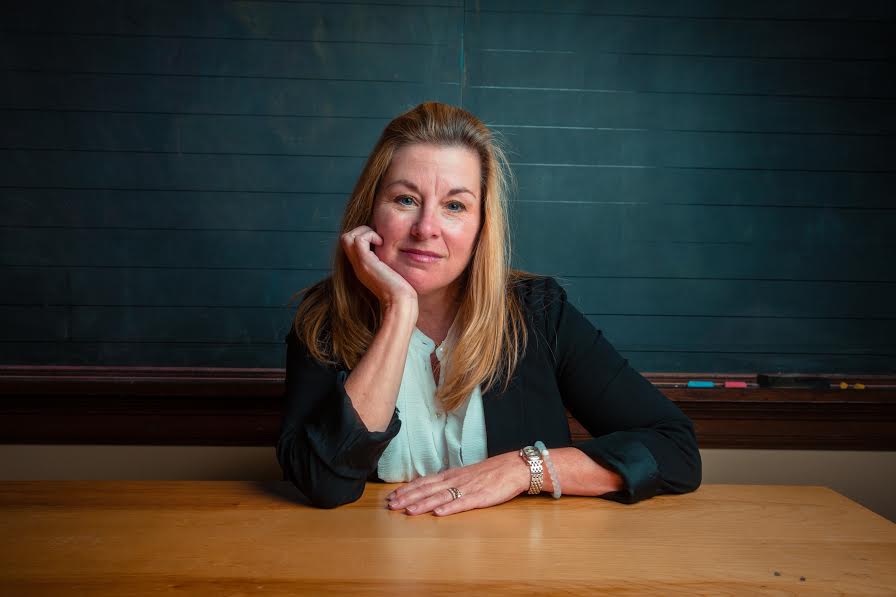
    Advertising enthusiast, idea-driven creative, relentless pursuer of insight Jennifer Hohn is a Senior Art Director at Vladimir Jones in Denver. This piece is cross-posted from Jennifer's blog.

  • 5 Good Minutes with Rob Schuham, Co-Founder of COMMON, Action Marketing and Undercurrent

    / Comments (4)

    Rob Schuham “grew up” professionally at storied ad agencies such as Chiat/Day in San Francisco in the 1980s and early ’90s, and worked at Ayer (New York and Chicago) right after. He’s been on the client side, too: As Marketing Director, Schuham re-positioned Schwinn’s Cycling & Fitness brand, and (true to form) launched Spinning, the enduring cardio workout — and a cultural movement unto itself. A marketer and business strategist who’s fascinated by what makes people tick, Schuham is also Founding Partner of Undercurrent, a New York-based global think tank and digital/social consultancy; Co-Founder of Action Marketing, an experiential and digital agency; and Co-Founder of the collaborative brand and creative community COMMON. We caught up with Rob recently — between everything else — to find out how he does it all.

    Q: What gets you out of bed in the morning?

    A: The fact that every day seems to turn out differently than I expected. And that every day I know in some way, shape or form, there is an opportunity to learn, grow and make a difference in all my different communications practices. Sounds silly, but it’s actually happening.

    ——

    Q: You started experiential and digital agency Action Marketing 17 years ago and have worked with huge, well-known clients — calling the agency “the definitive voice of Experiential Play theory.” What does that concept mean for brands, and why do you believe the shop does it better than anyone else?

    A: Seventeen years ago, the whole notion of what I started was in the space of “non-traditional marketing.” And the immediate thing I wanted to do was not be like the few other non-traditionalist agencies in that space – meaning that from the get-go, I wanted to paddle even further away from the pack. We ground that into our DNA and it stuck ever since. We were one of the first to drive digital into experiential, for example, and really integrate it into experiential marketing. And we have studied “play theory” to better understand and implement the notion of how to make consumers more playfully open and receptive to an experience, branded or otherwise. Our clients tend to love that we come in with ideas that make them uncomfortable and excited at the same time.

    ——

    Q: Action recently was sold to a private-equity-backed North American agency network, for which you now are Vice Chairman and Chief Innovation Officer, and maintains offices in both Boulder and New York. Why? What is it about Colorado — and Boulder and Denver specifically — that keeps your interest here?

    A: New York is critical for us, as many of our clients are there and it remains the media capital for the United States. At the same time, Boulder and Denver are really becoming a U.S. creativity and entrepreneurial stronghold. It used to be that we had to import most of our talent from major markets. But with the presence of more agency energy in Colorado, we are seeing a thriving community of creative and digital talent. And in the new ventures world, Boulder is a hotbed of startups. I travel a ton both nationally and internationally and have my feet in a few different cities, but there is nothing like driving home from the airport, cresting the hill into Boulder and breathing in the view. So Boulder serves as both a terrific mashup of incredible talent and energy as well as a beautiful respite for me. And Denver on a personal level has gone from a city that I frankly used to avoid going to 17 years ago to being one of the most culturally and gastronomically exciting cities in the country. When I’m in Colorado, I find myself in Denver pretty frequently these days.

    ——

    Q: You’re also founding partner of Undercurrent, a New York-based global think tank and digital and social consultancy. Tell us about it and why there was a need for it to be created.

    A: I started Undercurrent with Josh Spear and, soon thereafter, Aaron Dignan. Web 2.0 was new and gaining traction and most brands were caught with their digital pants down. It was a whole new language, and even their web agencies at the time couldn’t keep up with the accelerating advances. Josh was kind of a lighthouse for the “born digital” generation as both a trend-spotter and blogger, and was getting a ton of requests for consulting from global brands. It was an immediate hit in the digital space, and we continue to grow. We love to reimagine how brands and nonprofits alike operate and participate in the constantly evolving digital landscape. Essentially, we apply a digital worldview to the challenges of complex organizations, and it appears to be working thus far.

    ——

    Q: You have a passion for creating movements — specifically, brand and cultural movements. Where did this come from, and what is your latest movement?

    A: The art and science of movement-making is fascinating to me. I recently gave a keynote address to a group of marketing executives about the past 24 months of collective action that have occurred online. I wanted to blow people’s minds on how movements start to pick up steam and then hockey stick at a certain point of traction, as well as how brands can learn a thing or two from movements such as Occupy Wall Street, Arab Spring, SOPA and KONY. The most successful ones leverage memorable tools and levers to weave into cultural conversations. Brands try and fail time and time again to do something like this, but a few get it right and nail it. We worked on the Ford Fiesta Movement a few years ago and almost accidentally figured it out. We knew we had to be authentic, relevant and interesting, but we weren’t focused on things like creating memes. We sort of learned what to do and avoided what not to do, which was pretty awesome. And we leverage those learnings for all of our clients now.

    Latest movement? Hmm. The people at Undercurrent have been really inspired by crowd-sourced innovation. We strongly believe that Makerbot and the subsequent democratization of 3-D printing are going to put significant pressure on the closed innovation loops that large corporations protect fiercely. Between that, the expansion of TechShop, which are brick-and-mortar DIY workshops; and our friend Ben Kaufman’s Quirky.com, which helps people take their ideas from concept to store shelves, leveraging community input and influence; we will see a massive game-changing “home inventor” movement that we will be fanning the flames of with a few of our clients.

    ——

    Q: There’s a lot of interest and focus now on legitimate corporate social responsibility — not just having a few people or a department in place to fulfill this need, but taking a far more comprehensive look at how business is done. We understand that making social enterprise engaging is a key idea behind COMMON; can you tell us about that? Where did COMMON come from, and where is it going?

    A: COMMON came out of a workshop Alex Bogusky and I did together a few years ago on values and our mission surrounding the various endeavors we were working on together. Soon thereafter, John Bielenberg of Project M fame joined us. It was born out of a belief that enterprise and brilliant business thinking can come from anywhere – and that this expansive approach can be leveraged to create enterprises that can solve social challenges while creating profitable ventures. This part was being done mostly in reverse, whereby some very progressive companies such as Patagonia and Clif Bar were taking profitable businesses and leveraging their scale and reach to rethink social responsibility. All fantastic, of course. But we wanted to try it differently while taking it one extra step – and that is to inspire, facilitate and launch social enterprise under the aegis of one collaborative brand: COMMON.

    So where’s it going? Well, it’s really getting exciting now. We have a new management team that includes Mark Eckhardt, COO, and Dan Burrier, now CEO, who before was Chief Innovation Officer at Ogilvy. We’re taking COMMON Pitch to Chile this December. And we’ve already produced three other successful ones this year: NYC, Milwaukee and South Africa. So it’s very international in social business themes and attention. And the notion of literally giving social entrepreneurs a public stage on which to pitch their ideas to the world has been extraordinarily well-received. The even better news is that many of the finalists have received funding for their ideas. And something new is that we are now conducting MBAs (Maniacal Business Attacks) with several established companies and nonprofits to reshape their missions and compasses around the COMMON values.

    ——

    Q: You’ve been named Chief Buzz Advisor to Al Gore’s Climate Reality Project. How did that come about, and how does your experience apply to this work? What lessons do you learn from this endeavor that are important to consider for your clients who are not in this space?

    A: This is an endeavor that originally started as an important and interesting project to work on, but once I really understood the science as well as the urgency, it became a personal passion for me. It’s now my main philanthropic focus, given the enormous amount of work we have to do. It absolutely requires a high level of thinking, and the cool part is that I am working with some of the smartest, most capable people I’ve ever partnered with. The cognitive and cultural challenges of breaking through denial, taking down a PR machine of mistruths that creates doubt and denial, and getting humans to recognize the scale, speed and urgency around global warming is unlike anything I’ve ever worked on. Sadly and ridiculously, it’s been framed as a political issue, so we have a doubly challenging logjam. But I’m confident we’ll break through it so that other organizations, governments and corporations can focus on solutions and how to slow down climate change. Why? Because I believe that truth is ultimately stickier that lies.
    The thinking that we exercise on this problem goes back to your earlier question on movements. The past two years of work on The Climate Reality Project have helped me to better understand and contextualize cultural conversations. This is useful throughout my work on different brands. Human behavior is what must be understood to message and dialogue with consumers, because consumers are people too.

    ——

    Q: You’ve partnered with Alex Bogusky on several of your endeavors. What do you find most impressive about working with him?

    A: I think I know a different Alex than the people who worked around and under him at CP+B. He and I were friends first before we got into business together. We are also both very different people who happen to share a similar set of values. I hate injustice, and he hates unfairness. We both were able to articulate our respective hot buttons with each other in the pre-COMMON days because we humorously both asked ourselves what made us the most angry. While they are slightly dissimilar in terms of emotional drivers, they meet up in roughly the same place. FearLess and COMMON fell out of our joint desire to empathize with the human condition and try to create a system that rewards fairness and justice, among other things. Most impressive thing? He’s the real deal. The industry hype around his creative brilliance is actually well-deserved.

    ——

    Q: What is the thread that runs through all of your interests and companies?

    A: At the end of the day, it has to be fun. I always say there’s no such thing as a marketing emergency. And while that doesn’t mean we shouldn’t act with a sense of urgency, it does mean that we all have to remember – clients alike – that we chose a profession that’s supposed to be creative and fun. The cultures at every agency and consultancy I am a part of, or invest in, really reflect that. And as strange as it sounds, this really needs to be woven into philanthropic and nonprofit work too. Bielenberg, Bogusky and I throw around a thought pretty often: “If saving the world isn’t fun, who’s gonna do it?”

    ——

    Q: You invest in several ventures, including Boulder companies such as Pangea Organics and Justin’s Nut Butter. How do you decide whom to support, and what kinds of issues and opportunities most excite you?

    A: My investment strategy is simple: I need to understand it completely and embrace the lifestyle from which the idea was born. It’s even better if I can eat it or wear it. I have long believed in organics and been conscious about the role of food. And when I first got involved with Pangea, I didn’t realize just how much the body absorbs through our skin and how toxic mainstream personal care products were. When I invested in Made Movement, I knew that American manufacturing was important, but not how impactful a shift in my own spending as a consumer could be on U.S. job creation.

    ——

    Q: What’s next for you?

    A: I am involved in the launch of a new company called Skoop. The partners include myself; Dr. James Rouse of Optimum Wellness; Greg Stroh, who was a co-founder of IZZE; and Alex. Our first product is “Morning Skoop,” an organic powdered greens and reds drink that actually tastes terrific, as opposed to other products in the category that taste like ass. But we have a pretty lofty mission around solving the absurdly unhealthy condition Americans are in, and our company is not just focused around product, but on creation of content and awareness. I’m excited about where this can go.

    On the agency side of things, as you noted earlier, I was made Vice Chairman and Chief Innovation Officer for Match Marketing Group, the private-equity-backed agency network that acquired Action Marketing a few months ago. I like the notion of taking things to the next level. Shopper Marketing is the hot buzzword in the CPG and retailer world, and I want to reimagine it as not just promotional trench warfare, but as how to inject a little more joy and responsibility into the consumer experience. Being on the acquirer side of things, I’m also learning new skills as we look for other agencies to bring into the vision. I feel like such a private equity novice, but the hunt is going to be fun.

  • Silicon Beach 2012: Not Just London Preaching To The Provinces.

    / Comments (0)

    So The London Egotist went along to Silicon Beach 2012 at Bournemouth - a kind of mini SouthBySouthCoast. It was a 2-day event with guest speakers including President of the IPA Paul Bainsfair, Shane Walters from onedotzero and Nick Darken from Albion. Without exception, each presentation was enlightening and inspiring.

    Nick DarkenNick Darken

    Although much of the event involved London-based speakers talking to digital agencies in the Southwest, it was also a reminder that London doesn't have a monopoly on digital talent; there were plenty of innovators here based outside the capital. These are young people with low overheads, no responsibilities and a hunger to learn new things, experiment and innovate – if only for the fun of it. Not money-driven, just determined to create something new and exciting. Imagine enjoying your day job - kind of like that.

    If the brief demands digital, we immediately gravitate towards the web and mobile. But it could just as easily be a case of building something in the real world, triggered by beer bottles. Or goldfish.

    That's the sort of thing Syd Lawrence does at WeMakeAwesomeSh.it.
    Here's a young bloke who wears flip flops in October, has an over-fondness for 'message' t-shirts but will teach himself a new coding language if that's what it takes to get the job done.

    He'll think up something cool and make it because no one thought of it before. He'll think of a way to monetize it later, if at all.

    Naive? Well his company's just over a year old and his client list already includes Microsoft, Universal, Intel... the A-list goes on.

    Syd LawrenceSyd Lawrence

    Have we as agencies been blinded by the bright lights of our big city and become blinkered to the world beyond?

    Modern inventions like the Internet and railway locomotives mean it's easy to cast our nets out wider to catch talent with lower costs and a point to prove to the city slickers.

    How about collaborating with these outsiders and fast-prototyping stuff to get your clients excited? It doesn't have to be expensive and who knows where it could lead? Agencies get so caught up on the day-to-day, it's easy to forget to be pro-active. And that's where we can create real value for our clients and make ourselves indispensable.

    London: we should get out more.

  • We'll Forever Miss You, Brian

    / Comments (3)

    Below, you'll find a collection of tributes people wrote about Brian Suter after learning of his tragic death last weekend. So many friends. So many memories. We hope he can read them now.

    ——

    Brian was an enigma.

    I've spent the past several days and last several hours trying to write a fitting piece for this complex gem of a human. I've laid awake at night for the past 5 days, stories racing through my head. The stories are inappropriate. And I am numb.

    Brian moved to Colorado after his junior year of college to intern with Moxie Sozo. After graduating, he moved here permanently. We were his first real job. He worked hard. He stumbled and got up. Stumbled again. He got up again. If you knew him, you know what I mean. Brian, through some unknown hurt in his heart or kink in his DNA, was an immensely complicated being. Flawed, deeply human, and quite possibly the most effervescent beautiful kind generous soul-touching person I have ever met.

    I am out of words. Behind my eyeballs are huge pools of tears just waiting to come out. Brian loved the world and the world loved Brian.

    "The only people for me are the mad ones, the ones that are mad to live, mad to talk, mad to be saved, desirous of everything at the same time, the ones that never yawn or say a common place thing, but burn, burn, burn, like fabulous yellow roman candles exploding like spiders across the stars and in the middle you see the blue center light pop and everyone says awwww!" – Jack Kerouac.

    Thank you Brian for making this world a brighter, more colorful place. You mattered and you made a difference. We loved you. You will be missed.

    – Leif Steiner

    ——

    Brian was an individual in the truest sense of the word. He had an amazing sense of self from a very young age and never had an ego. He had a way of lifting you up from a bad day and giving you the biggest bear hug even with his small frame. His laughter was pure and his happiness infectious. I hope he is dancing in heaven, or playing air guitar. May he forever rest in peace with as much joy as he brought to everyone he came in contact with.

    – Elizabeth Claps

    ——

    I knew Brian before I ever met him. Having heard story after story about his ridiculousness, crazy antics, hilarious quirks and unimaginable adventures, by the time I actually had the pleasure of hanging out with him I was amazed by how genuinely wonderful he was. It's rare when you meet someone with so much confidence, talent, and kindness. I wish there would have been more opportunities to know him better. I feel incredibly lucky to have known him as well as I did. I think we all did.

    – Becky O.

    ——

    There are very few people in this world who can change your mood with a bad pun. And today, there is one fewer.

    Brian was the kind of guy who would always make himself the butt of the joke just to help dissolve the tension in a room. He was the type of art director who would never put a project away until it was up to his excruciating standards. And he was the sort of creative partner who would continue calling with new ideas until the wee hours of the morning.

    Brian always said that he worked in advertising because it’s a magical profession where you can be a grownup without giving up poop jokes. And, as our late-night security and cleaning staff will attest to, it’s a profession Brian wholeheartedly loved. I am truly lucky to have gotten to work with such an incredible art director and gotten to know such an incredible guy.

    But I should go now, the sky is calling.

    They must have run out of sunshine.

    ((That’s right b, you’re finally getting /copywriter cred. XOXO, k))

    – Karen Morris

    ——

    The first time I saw Brian at the VAB design studio at Penn State, I was a senior who just pulled one of many all nighters and was heading out the door to catch a nap and a shower before class. I probably hadn't seen him since I graduated high school, I didn't even know he was at PSU, let alone applying for the design program. The first word out of my mouth to him was "Spanky???" — the "beloved" nickname his brother and the rest of our friends called him in high school. The look on both of our faces must have been priceless, especially considering how haggard I must have looked and how bright eyed and bushy tailed he was knocking on the door. He was always eager to ask for advice, always fine tuning, striving for perfection. His ambition and drive to get into the program was apparent to me from the start and I couldn't have been happier for him when he was accepted. His kind of personality, the kind that was laid back and could always make you laugh was exactly what that program needed. We kept in touch after I graduated and he was going through the paces of Applied Communications, Packaging, Practicom and the like. He would often send me stuff he was working on I was always impressed with the quality and care that he took in his work. His projects had this sophisticated edginess that was truly his. It was never a surprise to me that he had such great success in his career at such a young age.

    Brian, you will truly be missed. I'm so glad to have known you for all these years and to have seen the awesome designer you had become. You never let the pressures of this field change you. The world has lost a wonderful soul, designer, and all around great guy. I know it will take me a long time to really accept you are gone.

    With a heavy heart I say, there is no apple + z in life. Miss you kiddo.

    – Kelly (Eng) Montanio

    ——

    Brian is a dear friend. I first met him in Design school at Penn State and we leap-frogged design career paths out here to Colorado 5 years ago. We became design jokester counterparts at Moxie Sozo where we not only expanded our passion for design but discovered our love for Stein cheers-ing, and hilariously horrible German accent banter.

    From our passion for design and love of the outdoors we became good friends. We rocked out to Hot Chip and Ratatat on I-70, cruised down the slopes (sideways, of course!) and high-stepped local Boulder trails.

    For those who know him well, his years of Halloween dressed as "Quail-man" and "David The Nome" were easily my favorites! He is our Co-Master chef at "Friends-giving" and cooks the best damn turkey I've ever had! He was our listening ear, music connoisseur, PSU cheering, Cat-loving, One-of-a-kind Brain, err... I mean Brian.

    We will forever miss his laugh, his warm greetings, silly moods and ability to make us smile. He was loved by many and will truly be missed.

    – Laura Kottlowski

    ——

    Brian was the heartbeat of the creative department. He played music for everyone to hear and told jokes so awful they were hilarious. He was great to work with as you knew the creative would be stellar. But he was also great to work with because he brought incredible energy to everything. Sometimes it’s easy to forget that advertising is supposed to be fun. But when Brian was around, you never forgot.

    When he had a day off, the agency didn’t feel right. Too quiet. Too calm. Something was missing. But then the next day, he would be back and the agency came to life again. I can’t believe he’s not coming back. I miss him. We miss him.

    Hey Brian, the good guy store called. They’re running out of you.

    – Dave Fymbo, Karsh Hagan

    ——

    I moved to Boulder to start a new chapter in my life a few years ago. To build upon my design skills, as well as to grow as a person. I came to Colorado knowing no one. I figured it was going to take some time to settle in, but little did I know, I was going to meet some of my closest friends. People that would inspire me more than I ever realized. Amongst them was Brian Suter. I met him along with a few other amazing people the first night I moved to Boulder. On Halloween night on Pearl Street. He helped me feel welcome and also was a part of one of the most fun nights I have ever had. That night made my transition to Colorado so much more fun and made my new chapter in my life something to look forward to. And to Brian, I thank you.

    Not only did he welcome me with no judgement and full of friendly laughter, but he also, along with his girlfriend at the time, helped to continue make my transition smooth. For the next 2 years they opened their doors to their orphaned friends that had no where to go on Thanksgiving (me included). I was always used to being around my parents for the holidays (whom I dearly missed). But thanks to him, his girlfriend, and all my other designer friends, I felt like I truly had a family in Colorado. He helped me feel warm and welcomed. And I will always be forever grateful.

    In addition to all of this, I have so many memories that I keep close to me in which I include Brian: Ski trips, Penn State games at Pat's, and a little bar hopping here and there. I was also blessed to be able to work by his side at Karsh for a very brief time. He was so talented. And although it was quick, it was so much fun to have the opportunity to work with him. He will always hold a special place in my heart. I hope your pain has subsided and your soul is at peace. Love you Brian and thank you for all that you have done for me.

    "Although it's difficult today to see beyond the sorrow, May looking back in memory help comfort me tomorrow."

    Rest in Peace, Brian.
    – Love, Chelsea Koornick

    ——

    I met Brian when I was in high school. From the moment I saw him, I knew there was something very special about him. He shared his love for music and art with me often, and every time I listen to Phish or Jack Johnson, I'll be thinking of him. We lost touch a few years back, and I wish I could have reached out sooner. I'm absolutely floored by this news, and hope his spirit will be ever-present in this world.

    – Sara Monacelli

    ——

    Two weeks ago, Brian and I were at the Bicycle Cafe, kicking back with a couple of beers, catching up. I remembered I was feeling inspired that day while working on my stuff, and seeing him only boosted my spirits even more. We promised each other that we would start a new tradition since he lived right around the corner and I was there all the time, plugging away on the weekends. Only two days before his death, I caught a glimpse of him in one of our office's conference rooms while I was passing by. If I had known that was to be my last time seeing him, I would have barged into that meeting and given him a giant hug.

    At the office, everywhere I turn, I'm reminded of him. Maybe it's because American Crew IS, at its heart, all of Brian's rad work. We had been friends for a couple years through Moxie Sozo before I had the privilege of taking his designs and creating new projects inspired by his own visions. Designers never like handing their work over to the client who then has their in-house team run with it. I know. I've been there. I can only hope that he felt better about it, knowing that I would be the one touching his stuff. Brian, I've never told you this, but I hope you were proud of the stuff we came out with for Crew.

    There are so many things I wished I had told him. Like how running into each other at the CBB offices always made my day that much brighter. Like how much I admired him, not just on a professional level, but on a personal level too. He was always, always full of energy and passion, drawing people in around him. So many reasons to love him. So many reasons to miss him.

    Brian, next time I'm at the Bicycle Cafe, I'm drinking a beer for ya. You'll always keep me company when I'm there, and you'll always inspire me when I'm at the office.

    Cheers my friend.

    – Anh Phan

    ——

    I met Brian the first 2 days of freshman year at Penn State and we instantly became friends. We ended up rooming together for 3 years at college; there were a lot of high times, a lot of low times and everything in between during those years, but through it all he was always a good friend.

    He was one of the funniest, most caring people I ever had the pleasure of knowing; he had one of the most infectious laughs of anyone I've ever known. It didn't matter how bad of a day you were having; you would walk in the door and just hearing the kid laugh would put you in a better mood.

    He was such a ball of energy! Brian lived his life between the balls of his feet and the back of his heels; always rockin'...

    I hope you found peace, my friend. You will be missed; I love you, man.

    – Anonymous

    ——

    My friends and I had just moved to Colorado for the summer back in ’06 and we were so broke that we couldn’t afford to put food in our fridge. [Enter Brian Suter into my life] Within an hour or two of his arrival our fridge was packed to the rim. Maybe it wasn’t filled with the healthiest of foods, more like a liquid diet of sorts, but Brian made sure our summer was off to a great start!

    More than just laughs Brian had heart and perseverance. Back in the fall of ’07, he decided to host a Thanksgiving feast for all of us misfits who couldn’t be with our families for the holiday. He was so proud to prepare his very first turkey, in which he had let marinate overnight in a lovely beer dressing. And yes, it was delicious.

    The thing about Brian was that he had such an effervescent personality people just flocked to be around him. The guy could make any story interesting and was never short on a joke. His laughter could fill a room and still echoes in my ears today. A personality like that of Brian Suter never dies. A person like Brian Suter is never forgotten. He lives on in my memories and in the thousands of memories held by other people he touched throughout his lifetime.

    Love you, Brian. I anticipate suitable typography and a fridge full of beverages in Heaven by the time I get there.

    – Jenn Caplan

    ——

    Brian came in to interview for the art director job around 5:00 pm 3 years ago.

    We were putting out some sort of fire drill and were too busy to stop and interview Brian properly. We apologized and asked him if he wanted to come back and he said, "No, that's cool. I'll just hang out." He ended up hanging out for about 4 hours and helping a ton. Of course we hired him.

    It's hard to put into words just how much fun Brian was.

    He always wanted to have fun. He had some of the worst jokes ever. And had no problem telling poop and pee jokes in front of the fanciest clients.

    When we would be working our asses off and verging on getting too stressed out, Brian and I had a running group of questions we would ask each other:

    Who would you eat? What animal would you fight? And, do you think these are the best years of our life?

    The third question was meant to poke fun at our current overworked situation. But often we would just smile and think, yeah. This is actually fun as hell and these are probably the best years of our life.

    I'll never forget the 3 years I got to sit 3 feet away from Brian and bug the shit out of him relentlessly.

    "Psst. Psst. Hey Brian? Hey. Brian?
    Hey. Brian? Brian? Brian. Brian. Brian?
    Brian? Brian? Are you there?"

    "What Sean ?! What !"

    "Nothing."

    Laugh. Smile. Flip me off. Tell me to fuck off. Close the gap. Put your ear phones back on. Go back to work.

    "Hey."
    "Brian?"
    "Are you there?"

    – Sean Topping

    ——

    Today, was a normal day. A birthday of a beloved account person, and work was going well for once. Well, as good as can be as the usual 5pm deadlines and such. In the midst of all this, someone nonchalantly says out loud, "Anyone read the Egotist today? The guy from the award show last week died. Brian...Suter?"

    This hit me. It hit me hard. And suddenly. I was coasting along with work when these words reached my ears and I literally stopped, mouse still in my right hand, left hand frozen in mid-air. I turned to my coworker sitting next to me, and confided that I knew him personally.

    I knew Brian, albeit not well. We were not drinking buddies yet, as those plans were still in the planning stages — which really meant we were so busy that we just never thought anything of it. There was always time for meeting up for beers. We met a few times, I worked with him one day, and otherwise, we were simply Facebook friends.

    But death, is never easy to swallow. Death hit me deeply, and devastatingly years ago. Counting the years now, it has been almost 9 years since my father passed away while I was still in high school as a junior. He never saw me graduate with a diploma. Seeing an ambulance on my usual route back home today after work, I saw an ambulance with its lights on but no sirens. This is the same way my father was transported to the hospital, no rush, no sirens, just lights. And at one point, the lights turned off. Since then, I have equated this to meaning that the patient in this vehicle has no hope for recovering.

    It's been years, but the pain is still there. And though I thought such a personal and close death has made me cold to death, hearing of someone I knew brought it all rushing back.

    It does not matter that I did not know Brian well, to write this. He was not part of my daily life. But it has affected me. It affects everyone that knew him. It will nearly kill those who were dear to him. We all take death differently, almost absent when it's someone we have no relation or connection to. But death has hit us all personally, as we lost not a great creative, but a great person to this community and this city. Brian was a great person which is apparent from only a few meetings. Such energy, with such a vibrant personality. And talk about killer style. And dare I use this word, spunk. He was close to my age, with so much talent — so much positive future in his hands.

    Pain of a loved one changes what death is, and any relevant death brings it all back. For those who are close, his direct family and his otherwise 'family' it's a raw kind of pain. Take all the movies that made you cry, imagine all of them combined into one movie that makes you cry. Now imagine this pain, at least a hundred fold. The raw kind of pain, that hits you mentally and emotionally, but physically, that shakes your very mind and soul. This is only a glimpse into the pain that death brings to close ones. And this is the kind of pain that you never get over.

    We must all take a moment to reflect, and appreciate what we have around us. Brian Suter will be missed.He has a quote on his page, "Those who think they are crazy enough to change the world, are the ones who do." And he certainly has. Revel in what he has created. Celebrate his memory.

    – Brian Son

  • The Day Cactus Gave Its Interns More Teamwork, Process and Responsibility

    / Comments (2)

    Let’s face it, internship programs at creative agencies mostly suck. They eat up time and resources, and the work is usually junior at best. Sure they can act as a semester-long job interview, and over Cactus’s two decades of summer intern programs, we’ve hired more than a few participants — they’ve injected fresh energy and novel ideas into our culture. But in an industry where hours are always in short supply, lavishing them on interns sometimes just isn’t worth it.

    So this year when my business partner Joe Conrad and I were deciding whether to keep the program alive, we were leaning towards no. Doing it “right” seemed like it would require pouring even more agency resources into it. The ROI just didn’t seem to be there. But the thing with big ideas is they almost always require risk.

    I wondered what if we didn’t have the interns work on Cactus clients? What if we could create an integrated agency within an agency, equip them with Cactus’ beliefs and processes, and find a client that had a business problem they could tackle. Not a nonprofit looking for free work, but an experienced client that would expect the absolute best an agency can deliver.

    We focused on three key components;
    1. The interns be integrated and represented across all departments.
    2. The interns have clear training and management on Cactus’ beliefs and process.
    3. We provide the interns with their very own client separate from existing Cactus clients.

    For recruiting, management and training we assigned lead team members from each department. This intern management team met regularly as the program ramped up and also gave each of the 7 new interns a go-to Cacti if they had questions, problems or issues during their summer.

    This team also provided inspiration and gave strategically planned assignments to get the interns to act as a team. On their very first day we gave all interns a purposefully short and intensive one-week assignment — to make a video that would support Cactus’ annual Bike from Work Bash event. This spontaneous and rigorous crash course in problem solving and resourcefulness led to a fun video, but more importantly a team of 7 strong individuals, now with tighter relationships and value for one another. After just one week, they were acting, joking and working together like a team that had been together for 3 months.

    Lastly we did something that was a bit unconventional. We wrangled a piece of business specifically for the interns to manage as a unified team. But not just any business or any assignment would do.

    The interns needed full control, yet the assignment wouldn’t be valuable if it was just some random spec piece of business. And conversely it wouldn’t be successful if we got some cool, big brand, but the client’s marketing team didn’t have time to truly collaborate, input and be a “good” client to the interns.

    We were very selective in finding just the right client for our team. At the top of our list was Whole Foods Market. We knew with their progressive business and marketing model, their high standards for business and community values — that if they were willing — they would be a great fit for us. So we called and asked if they would be interested in this endeavor, having a fully integrated team of interns take on a marketing assignment using Cactus’ process and oversight, but it would be 100% driven by the intern team.

    They were not only willing, they were thrilled because the program fit their values and ideals well and they immediately saw the benefit that this program could have in helping them solve a current business challenge.

    Whole Foods agreed to give the interns the required energy and time to input, access to their data and team members, providing interim meetings and feedback, and working with the team throughout a 10-week process. For their investment of time Whole Foods received in return, 2 strategic proposals and campaigns based on research, planning and observations that not only catered to the Whole Foods Market customer and target audience, but catered to a custom understanding of Whole Foods’ marketing team, their systems and operations and how Whole Foods goes to market internally.

    Part of the success was that Whole Foods gave the team a real assignment, not fluffy internship busy work. The assignment was challenging; to figure out how to promote and raise awareness for the “365” brand of “Whole Body” products. 365 is Whole Foods’ private-label product line, offering everything from packaged foods like milk, spaghetti sauce, cereals, etc, to the Whole Body 365 products like shampoos, makeup, lotions, toothpastes, etc. And all of the 365 products are made to the same high standards of quality and environmentalism that you’d expect from their food products. The problem was that Whole Foods’ success and reputation for organic foods was overshadowing their “Whole Body” specific products.

    This unawareness issue causes many of their customers to shop the outside loop of the store where they get their organic meats, cheeses, and veggies, but then they skip the inner aisles without really noticing the 365 Whole Body products. So the intern’s objective was to somehow get people to pay attention to the notion that if you care what you put in your body, you should also care what you put on your body.Through the summer the interns had their share of ups and downs, just like any complex and intense assignment. But they always overcame issues and grew even tighter as an integrated team, overcoming amazing challenges and time constraints. Mixing both Cactus client work with the intensity of the Whole Foods assignment made for a busy yet rewarding summer.

    The results were greater than our set goals for our new program. The team’s ideas were so well received by Cactus and Whole Foods that Whole Foods is currently in the process of working with us to deploy these ideas across the Rocky Mountain region.

    "We love win-win-win propositions," said Ben Friedland, Executive Marketing Coordinator for Whole Foods Market's Rocky Mountain region. "Cactus made a stellar introduction to a prospective client, Whole Foods Market won with fresh, creative talent tackling a business need, and the intern team won with honest to goodness real world experience. It is such an innovative approach. We were lucky to participate."

    This internship program has become a bridge to the beginnings of a genuine business relationship. One that has benefited all parties tremendously, without exorbitant amounts of effort.

    Instinctively we knew that giving the interns their own client would have benefits. And what we came to find was that it forced a sense of accountability that we might have otherwise taken for granted. This unique assignment made the interns feel special, but also meant they had to bring their A-game. They couldn’t just rely on our knowledge or on our relationships with an existing client. For every idea, insight, solution, and presentation, the interns really had to earn it.

    Conversely, it was rewarding for the Cactus team, to help nurture and train such talented students to work as a team, and to work efficiently and effectively using Cactus’ process and models. The Cactus team was rewarded to see the output of the intern team reach extremely high levels of quality in their work.

    Their solutions weren’t just deemed a nice intern campaign, but rather on par with the leading work we do for all our clients.

    Norm Shearer is Executive Creative Director and Partner at Denver advertising agency Cactus.

  • 5 Good Minutes with Jonathan Balck, Managing Director at Victors & Spoils

    / Comments (3)

    Jonathan Balck spent the last eight years at CP+B where he led the account team that won the 2010 Cannes Titanium Grand Prix. He's worked with MINI, Burger King and Saturn as well. Originally hailing from the West coast of Michigan, Jon is actively teaching himself Italian, guitar and photography and serves as an adjunct instructor at the University of Colorado Journalism School.

    Q: Eight years at any agency is a long time. What drew you to Victors & Spoils after such a long run at CP+B?

    A: Every few years I set a new career goal for myself. Early on it was to get a job close to home. Then, to get one far away. Along the way I experienced agencies in the afterglow of their best work. They had their Lions from 10 years ago displayed, their 5-year-old Agency of the Year magazine covers framed on the wall. And I decided to seek out a shop that was inventing the future, judging success on what they did last week, not last year. I was lucky to start at CP+B in 2003, when we were 130 crazy people in Miami. And I’m proud of my (small) contribution to the way CP+B rocketed to the top, changing culture and the industry. Now, with V&S, I’ve set a new goal – to try to help build something revolutionary from the ground up.

    ——

    Q: Does part of joining V&S mean you have to give up being selfish? Advertising people constantly want to own the idea and the recognition from it (you lead the account team that won the 2010 Cannes Titanium Grand Prix for Best Buy’s Twelpforce, so you know how it is) — but at V&S, all of that selfishness takes a backseat to the idea.

    A: Every great idea that I’ve seen has been a team effort. At V&S we’re just making that truth central to our process. Even though we’re the “professionals,” we see great ideas coming from everywhere every day. Everyone is invited to be part of our team and share credit. It’s a key goal of ours to see a crowd member on stage accepting an award on behalf of themselves and V&S.

    ——

    Q: Each time a story is written about V&S, haters of the crowd-sourcing model show up in the comments section, including stories about your recent work with DW+H to help rename their agency. Do you think the haters have a point?

    A: Fact is, we’re not forcing the change or even inventing the change. It’s happening. So they’re not necessarily wrong in their complaint. Change is hard. Especially for those who are the most comfortable with the status quo. We just want to innovate rather than waiting for innovation to happen to us. Now, we don’t know yet if V&S will be the Napster or the iTunes of the coming revolution in the way creative ideas are sourced and paid for. But at least we’re having a say in how that change looks.

    ——

    Q: How is Havas’ majority investment in V&S affecting the shop?

    A: It’s been great to see the way a huge global network can rally around a little crew sitting under a pirate flag in Boulder, CO. You have to give credit to David Jones and his team for making a bet on one way the future could look. We’ve already worked on projects within the network in Australia and the UK. Both were very cool opportunities that we never would have had without the relationship. We’re looking forward to many more.

    ——

    Q: What are you guys working on these days?

    A: I invite your readers to check out victorsandspoils.com for the latest.

    We’re pitching a lot right now which is both healthy and stressful. And we’re constantly working to improve both our digital platform and our engagement with our community. We’re “mistress of record” for a number of Fortune 100 companies. And while we revel in our role of change agent among our clients’ agencies of record, it does mean that many of our assignments need to remain secret.

    ——

    Q: You teach a class at CU called Creative Account Management. What does that mean and why do you do it?

    A: I teach with Jeff Graham (who just started Grenadier here in Boulder). When he and I were in college in the early 90’s, there were no classes teaching how to be a great account person. And most cultural references were limited to golf and cocktails. We wanted to present the other account person. The one whose insight is respected and craved, whose contributions are critical to great work. So we ask students to reverse engineer creative briefs from finished ads each week. Basically: here’s an ad you’ve seen, what did the creative brief say to get that idea? And through this process we hope to impart the idea that account folks need to be strategic thinkers, diplomats, problem solvers and champions of great, effective advertising.

    ——

    Q: Who shaped your career and helped you get where you are?

    A: I truly do stand on the shoulders of giants. I already mentioned Graham, who saw that I might love teaching. Steve Erich, Alex Bogusky and Jeff Steinhour at CP+B gave me the opportunity to learn and contribute at the industry’s highest level. Walt Smith, who ran Saturn at Hal Riney, helped me understand what “great work” and a “great brand” really can be. Jane Brennan at Detroit’s old Bozell office encouraged me to step out of my comfort zone and move to California. And of course John Winsor, whose vision allows me to work at a high level while riding a cruiser bike to work.

    ——

    Q: From V&S' unique perspective, what are you hearing from clients about the ad industry these days?

    A: Maybe it’s because our model attracts a very specific sliver of the industry, but we don’t hear a lot from clients who want a new TV spot or even a new ad campaign. They’re looking for ways to bring their customers closer to their brand. That’s not really a new idea, but it sure can be tough to execute. There was a story just last week about Coca-Cola changing the way they innovate to be more transparent and open. Harley-Davidson has made consumers central to their advertising for a couple years now. Our recent work for Smartwool has as well. Consumer-centric is not the future anymore, it’s simply how to do business.

    ——

    Q: John Winsor, CEO of V&S who was also promoted to Chief Innovation Officer of Havas Worldwide after the acquisition, recently said, “Every day we're learning @VictorsnSpoils that it's more about the community than it is about the technology.” What’s he mean?

    A: When we first built Agency Machine, which is our digital collaboration platform connecting the 6,000 members of our community, we kind of assumed the machine was the key to our business. But even as it simplifies the process and does all these wonderful things, we realize it’s only as good as the people putting in the ideas. Now that the machine works pretty well, we’ll be putting a lot more time into giving the community more opportunities to win. Since we opened, we’ve paid out over a million dollars in awards. And we’re proud of that. But direct compensation is just one way to champion the crowd. How can we make members famous? Can we connect members to full time jobs that are perfect for their particular skills? Can we find a way to post more design, strategy and production jobs for our folks to dig into? We have big ambitions for the crowd and ourselves and we think we’re just scratching the surface.

  • D&AD /50. Celebrating the best of the best of the best. A mere mortal's point of view.

    / Comments (1)

    50 years of D&AD. Awards night. A chance to mingle with industry legends. People who’ve inspired you. People who’ve fired you. People you rate. People you hate. Genius. Fools. Intimidating. Humbling. It’s like the last 20 years of Campaign brought to life. Augmented Reality without the app.

    It’s nights like these that put things in perspective. Of course it bypasses all the day-to-day struggles that every piece of work endures. But fair play, the people collecting their pencils are only performing the final act of a process that no doubt involved shielding that precious idea from all the slings and arrows of outrageous meddling.

    Awarding 50 years of excellence, it’s fascinating to see that stalwarts such as Tony Brignull, Neil Godgrey and Frank Budgen took the top honours but breathing down their necks were relative newcomers/upstarts such as Eric Kallman, the chap behind the recent Old Spice work (he doesn’t look like the third most awarded copywriter in D&AD history, BUT HE IS).

    It’s also interesting to see how the icons of the industry have turned out in their post-advertising dotage. We had Alan Parker, Lord Puttnam, Frank Lowe, Tony Brignull and Neil Godfrey all on one stellar table (not ours). Insight: all dressed down (Frank in jeans, for example) and all sporting that specific length of grey facial hair that spells ‘dishevelled / loaded / don’t care / nothing to prove.’

    Maybe if we can master that look first, the rest will follow?

    A quick word on D&AD itself. We should be immensely proud of it. To borrow from Voltaire, if it didn’t exist we’d have to invent it. We as creatives need a framework, a benchmark a reward beyond the paycheck and successfully getting work out the door. It makes us believe in the greater good, the higher calling, the appreciation and development of craft. It drives us to create work that enriches in a much broader sense than sales.

    D&AD, a global beacon of pre-eminence. Envied, emulated, but never bettered – you only have to see the Retweets bouncing around the world this morning to see its place in the global creative community. In this year when British creativity was put in the shop window to astonishing effect (we’re talking ‘Olympics Opening Ceremony’ here) is it a stretch to say that D&AD and its halo effect have played an integral role in creating a culture where this level of creativity can flourish?

    If we strip away the awe, the envy and the back-slapping, what can we take from this night?

    Well, this was celebrating the best of the best of the best, glorying in the craft, vision and creativity of our industry. No venn diagrams in sight, no briefs bloated with buzzwords and puff. Just the work. The best it can be. Buffed, honed and hard-won. Honouring the ideas that survived intact. And that’s the battle. That Eureka moment is just the B if the bang.

    It's a hard slog but if we could somehow bottle this moment of collective excellence or freeze that frisson of inspiration and hold it in our hearts, even in our darkest hour, perhaps we can use its gravity to pull us towards that distant podium.

    Happy Birthday, D&AD.

    Get more awesomeness from The London Egotist here.

  • It Only Takes One

    / Comments (8)

    By Chris Council

    The photography business, especially in the editorial realm, has become a race to the bottom. The only way the industry will stabilize is for photographers to band together, stand up and say “enough.” Photo credits don’t pay the rent, and neither do below-market fees. Sometimes it’s hard to say no to a job, even a low-paying one, but everyone needs to decide their own personal breaking point when it comes to accepting a job.

    To put this in context, here’s an example of a recent “job” that I turned down. I put the word job in quotes, because it didn’t pay anything. The USA Pro Cycling Challenge rolled through Aspen a few weeks ago, and I was contacted by a representative of the local chamber of commerce to photograph the event. The pay — nothing, zero, nada, zip.

    But I was told it would be an “incredible opportunity to ride on the back of a motorcycle to photograph the event.” All I had to do was drive 3 hours to the next town over the night before, spend the day on the back of a donorcycle without falling off, use $12,000 of my own equipment, provide the images to the chamber of commerce (where they could be used however they wanted, as long as they wanted), and oh yeah, somehow find a way back to my car after the event which would entail another 6 hours in the car round-trip. No thanks.

    I was berated by the agency and made to feel that I wasn’t contributing to the community, since everyone else was pitching in. Ironically, the agency was being paid handsomely by the city, which spent $258,000 the prior year on the event, including $50,000 spent by the chamber of commerce. You would think they could come up at least a nominal day rate to pay a photographer.

    Aspen is a small town, and the photo community here is small and fairly tight-knit. I was first in line for the job, and after I turned down the “job” the other local photographers gave the same response as me, except one, who accepted.

    Which brings me to my main point, which is that it only takes one person to drive down rates and lower the bar. So instead of the chamber of commerce budgeting properly for this event next year, they will once again assume they can get free images.

    There may be times when it makes sense to do a job for free, although I’m hard pressed to think of any. Perhaps it’s any opportunity for access you could never get otherwise, and you think there’s a way to sell the images as stock afterwards. Or perhaps you are trying to break into a new specialty and need the practice and exposure.

    But if you take a photography job without pay, or below market rates, you had better have your reasons, and they had better be damn good. And make sure you think long and hard about how your actions affect the industry as a whole, as well as the other photographers in your community.

    Chris Council is the chief photographer at the Aspen Daily News, and is also available for editorial and commercial freelance assignments. He and his camera have traveled in 42 U.S. states and 22 countries on 5 continents, including Russia, Estonia, Croatia, Poland, Tanzania, Thailand, Egypt and Australia. He is an avid outdoorsman who has bicycled across the United States, climbed Mount Kilimanjaro and hiked in the wilds of Kamchatka. This editorial was reposted from his blog.

  • Can You Leave Your Morals at the Ad Agency’s Door?

    / Comments (31)

    Call them morals, ethics, beliefs, principles, I don’t want to get into semantics here. You live your life by a certain set of rules, and we all have a slightly different set. Anyone who reads my column regularly knows I lean very far to the left on most issues, and that rubs a lot of people the wrong way. And I really don’t care. In the same way, you shouldn’t care if your views piss people off either.

    But when it comes to doing the job we do, is the best creative work done by people who don’t give a flying fuck about their morals when they cross the agency threshold? Or by people who can, by some extreme act of willpower, disengage emotions and just get on with the job? There have been several times in my life when my morals were really pushed to the limit.

    It started in my first ever job out of college. It was, by no stretch of the imagination, a job that was a million miles away from the glitz and glamor that I thought advertising was all about. Most of my time in the first six months was spent working on credit card mailers, slimming products, local car ads and other such crap. There were bigger, more glamorous accounts at the agency, but they were reserved for teams that were not fresh out of college. Those accounts were earned.

    Then, one day, the creative director said he was giving us a chance to work on a big account. But it had one slight drawback. He knew both my partner and I were anti-smoking, and it was a cigarette account. To be precise, a cigarette account in a country that was very poor.

    Hmm. Do we want to say no, and delay the chance to work on great accounts for another six months? Or do we do it, and sell poisonous shit to people who cannot afford it, and will go hungry in order to buy a pack?

    We chose the latter, to our shame. And we did a cracking job on it too, with the campaign being loved by the client and outperforming any previous campaign by a good 20%.

    YES! We had succeeded…in selling more death sticks to people in poverty than any previous team before us. Talk about a double-edged sword.

    Over the years, other such challenges have raised their heads. Most of the time, I kick my morals or beliefs to the curb and just get on with the fucking job. I’m a professional, I get paid to keep the clients happy, and my personal beliefs have no room at the conference room table.

    Being such a lefty liberal, I had to bite my tongue and advertise a Republican candidate on more than one occasion. He wasn’t even a moderate. He was the kind of guy Rush Limbaugh would consider a bit too right wing. And yet, I did it, and he got elected on the back of the work we did.

    I still regret that one. Much like a lawyer who gives a criminal the best possible defense, I did the best job I could on his campaign. Should I have thrown it?

    I’ve also been directly responsible for pushing ads that I knew, beyond a reasonable doubt, were “conning” people out of their money. Everything was legal, but my God, I certainly walked the line. Thankfully, that company is out of business now.

    I could go on, but I am way more interested in what you have to say. Maybe this is some kind of catharsis for me, to see if I’m not the only one who says “fuck it” to my beliefs in favor of doing a good job (and keeping it).

    Would you work on the “Beef. It’s What’s For Dinner.” campaign if you were a strict vegetarian or vegan? And could you really do a great job, even if you try and kick your own beliefs to the curb?

    Could you advertise alcohol if you were on the wagon? Could you really convince other people to drink booze even though you’re off it for good?

    What if you’re anti-war? Would you happily work on the Army or Marine Corps accounts? Would you do it begrudgingly? Would you “just say no?”

    Could you ever work on advertising for the KKK? What if your job depended on it? Would you do a piss poor job if you had no other choice?

    In the past, when it was easy to go from job to job, having morals was a little easier. It was possible to turn down some accounts, or raise objections if pitching for work that you believe the agency just should not have.

    But these days, with the industry (especially in Denver) being so fragile and work being so hard to find, could you dare stand up for your beliefs and sacrifice a good job? Would that make you feel better, when you had no food to put on the table for your family that night?

    We all, to some extent, do things we don’t like to do for money. No one really wants to work on shitty credit card mailing packs. No one likes doing godawful radio spots for local clients. It pays the bills, and we know it.

    But where is the line, and when do you refuse to step over it? Do we, as advertising professionals, have any right to let our own personal morals and beliefs interfere with the job we are being paid to do?

    Go on then. Chime in.

    Felix is a site contributor, ranter and curmudgeon for The Denver Egotist. He’s been in the ad game a long time, but he’s still young enough to know he doesn’t know everything. If he uses the f-bomb from time-to-time, forgive him. Sometimes, when you're ranting, no other word will do. In his spare time, he does not torture small animals. He's been known, on occasion, to drink alcohol by the gallon. Do as he says, not as he does.

  • Inside Work Club's tshirtOS Campaign

    / Comments (0)

    The London Egotist caught up with Work Club's Al Amin to get the story behind their tshirtOS campaign. It's already generated a lot of buzz in London and beyond. And that's the idea: the more people that register an interest, the more likely this amazing programmable tshirt will come to market.

    What was Ballantines' brief?
    Make "Leave an Impression" famous digitally.

    How does this brief fit into their overarching brand strategy?
    It's at the top. Ballantine's want to innovate their marketing by putting ideas and products into market that truly bring their brand idea to life and make it famous.

    How did you get to tshirtOS from the brief?
    Ballantine's believe in personal expression, that's how you truly leave an impression. We looked at how people globally leave an impression and tried to work out ways that we could innovate this for our community.

    We believe that the original canvas for personal expression is the t-shirt. Its the original canvas that allowed you to project who you were as an individual and tell the world what you think, who you like and what you do.

    By injecting technology into this and connecting it to the internet through your phone, we are able give you the tools to go and leave a better, more innovative impression.

    What made tshirtOS the right solution to the brief?
    It's not an advertising line, a poster or a TV ad. It's a real, functioning product that people can use. It does truly allow people to 'Leave an Impression' in a new and innovative way.

    What technology was used to develop tshirtOS?
    We worked with Cute Circuit who already had developed their own IP in the brain. Work Club came up with the idea of making a tshirt that ran an operating system that would connect to the internet through your phone. They helped develop the product with our vision.

    Who did you work with to make it happen?
    Cute Circuit and Media Monks.

    What was the project's biggest challenge?
    Building something that had never been done before in a joint team. It's a functioning prototype but it's expensive because of all the bespoke technology.

    There are a few doubters assuming it's fake. Can you prove them wrong?
    Absolutely. We are releasing test films of the tshirt in action and we will also be doing interviews with blogger and TV journalists over the next few weeks.

    How many countries is the campaign running in?
    Global, including Mexico and Brazil.

    What's the end objective?
    Put a product into market that allows people to leave a more innovative impression and builds our brand stature.

    Other films of tshirtOS being unleashed around the world will be released over the coming weeks, including tshirtOS being tested in Mexico City and São Paulo. The films will be available on tshirtOS.com along with further information around the project.

    The ultimate goal is to create the world's first commercial digital T-shirt. As a prototype, tshirtOS is expensive, but the more interest there is, the more accessible the price will become, so if enough people want one, tshirtOS will be produced and purchasable. Interest and demand for tshirtOS is being captured at tshirtOS.com through a registration form.

    “Since we unleashed tshirtOS into the world, thousands of people have said they want one. To those who haven’t registered yet, go and watch the film,” says Ballantine’s Digital Manager, Rohan Nayee.

Rocket Fuel